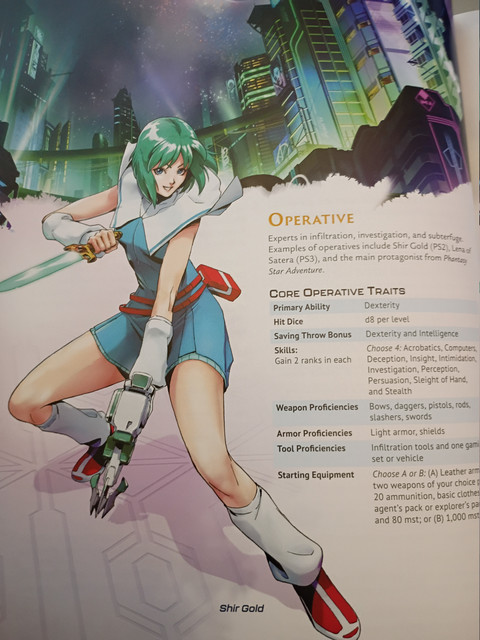
I played through the four main games since I got in the mood for it. These were replays, except for
PSIII, which I finished for the first time. I'll talk about the games in a descending order of preference.
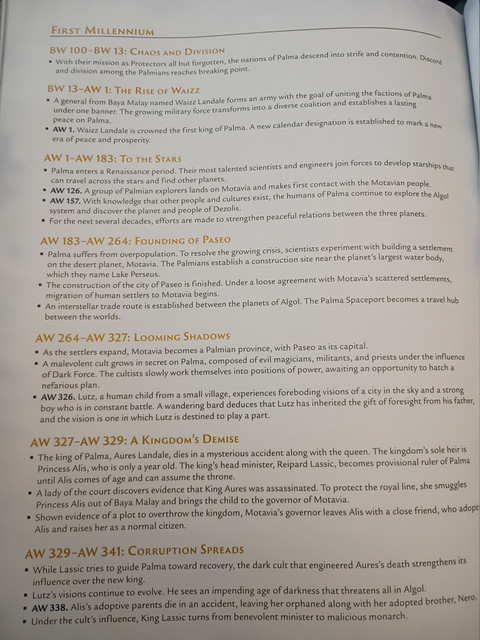
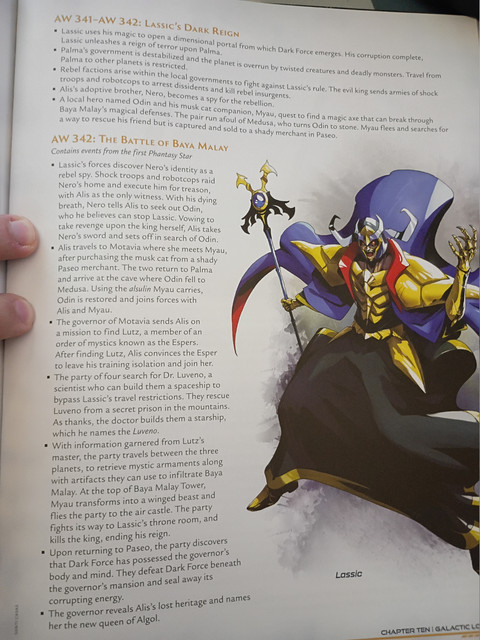
Phantasy Star
I think the most important governing factor for my interest in RPGs of this vintage and format are the narratives they tell. I don't mean textual narratives in this case, but the spatial, navigational tale one undertakes in interacting with them; those are the stories that emerge most meaningfully in how these games are structured. With that as a priority, how could one not hand it to
Phantasy Star? Its alternating modes of overworld megapuzzle and first-person maze dungeon exploration still strike novel today, and within its own series. The archetypal design language of synthesizing information from multiple sources to find one's way is at its strongest here, partially because the long-term structure of the game with its multiple-planets premise is used to the most diverse ends the series would see. For the following games that shared the concept, planetary travel would often signify a clean chapter break from one stage of the game to the next; you'd have few reasons to return to earlier locations.
Phantasy Star's setting under its martial law has made civil liberties restricted, but society still ekes on: Alis and co. eventually need to commission their own private spacecraft but before that they take commercial flights, and there's a back-and-forth to their investigative process across the Algol system that is not seen elsewhere in the series as the player puzzles out the next point of interest to pursue. The penultimate reaches of Baya Malay overlooking the starting meadows on Palma are as memorable a bookend as glimpsing the Dragonlord's citadel over the lake or scanning the corrupted Hyrule Castle across the horizon.
Phantasy Star III
For the above merits present in the original, in my eyes
Phantasy Star III is the only real successor the series has. This is provided you play either in Japanese or with a
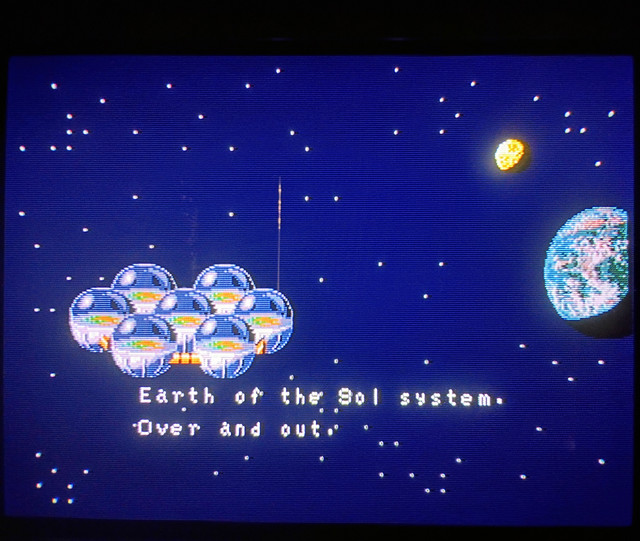
retranslation patch, as the official localization sabotages the game's central strengths in player-directed exploration by rephrasing hints into plain directions. Without that unforced error diluting the experience, there's a wonderfully free-to-get-lost-in world to unravel, populated by the most startlingly odd and barely animated enemies in the series to contend with along the way (within an absolutely brutal encounter rate, to be clear). As a setting, a colony dome ship masquerading as a fantasy RPG society is the kind of fanciful mixing of genres that lived strongly in the first game and didn't necessarily emerge with the same kind of balance in other series games... and yet
PSIII does not feel beholden to its past in the imagery it conjures up or the story it conveys, because the legacy elements of the series take a distant and half-recalled nature in its setting, leaving room for the game to craft its own identity. With its story of generational civil warfare amongst what is essentially one great colony ship's crew and population, in their fragmentation and radicalization against one another through the years there's a very palpable encroaching tragedy to all the events that unfold, and one of the starkest portrayals of the series's overarching "dark force" thematics and how they manifest in its world. The androids as a new facet to the series's cosmology feel representative of that quiet march of history: whether it's the half-broken Miun wandering the desert through all the generations searching for her master in futility, Siren perpetuating the cycles of abuse in the name of long-passed masters of his own, or the stalwart Mieu and Wren witnessing all the deeds and fates of Rhys's bloodline, capable of only watching and assisting the inexorable.
Phantasy Star II
This is the
Phantasy Star capable of eliciting the deepest and most turbulent pangs of emotion from its audience, whatever the nature of said feelings may be. It could be imprinting upon its period-evocative big-hair sci-fi aesthetics that craft a look that is iconic and singular within the series, while informing what would come after. It could just as well be baffled awe at its dungeon design style: multi-floored, teleporter-happy from the word go, dead-ends aplenty, rejecting the legibility of grid-based layouts. Maybe it's a fascination with its tonal commitment to grim trajectories, from shockingly violent supporting character arcs to governmental oppression to party member death, planetary collapse and pyrrhic victories. And even still, maybe all that bleakness combined with the demands of the dungeoneering and the rigours of surviving the game's challenges--doled out in sequential, repetitive chunks of increasingly convoluted action--translates to players not seeing the adventure to its end. Much of this game plays out as monotonous as one imagines Rolf's government job to be, and I'd be hard-pressed to call it ludonarratively harmonius as much as simply undercooked. Despite its strengths in key plot events and what kind of portrait they paint, the plotting so far as "what you do in an RPG" is at its simplest and most unengaging out of all the series games. I think its fate is to remain that kind of wounded exemplar; a purveyor of big ideas and arresting iconography whose stumbles in structure are just as integral to its character as the successes of its tonal explorations.
Phantasy Star IV
I must deploy a critical platitude at this juncture, because nothing else really suffices:
Phantasy Star IV is not a game for me. It's a sensation I feel in preference to RPG design, as well as a literal descriptor. The former is perhaps easier to quantify: a reason for outlining an RPG design style preference at the beginning of this writeup was to provide a foundation to conveying just how disinterested
PSIV is in anything of the sort. Its dungeon layouts are trivial, gearing up for more than half the game to reach a point where even the most complex of them offer one doorway branch to a treasure chest and no more--back to following the one path that exists. Its overworld navigation is laughable, with the entire world laid out in what amounts to in practice a straightforward sequence of one primary location to the next; it offers no chances to lose one's way in. Everything in
Phantasy Star IV is propulsive, to-the-point and streamlined, and feels like it emerged from an entirely different world of RPG design compared to the previous three games, because in large part it did: a late 1993 release is inarguably worlds apart from even
PSIII's early 1990 launch. Trends and conventions had shifted massively in that time, with works like
Dragon Quest IV and
V, as well as
Final Fantasy IV and
V, having arrived inbetween; those works too strove to reinvent the design languages of their predecessors.
Phantasy Star IV's attentions are no longer devoted to tense long-form dungeon treks or the large-scale investigation of its world: it's a game that acts with the aspirations of a blockbuster in the context of its genre and time, emphasizing the highly ambitious and labour-intensive panel portrait presentation for its cinematic scenes and condensing the time the player spends out of dialogue scenes or flashy and frequent boss battles (something the series also did not previously do much).
Another contrasting aspect with a previous work reads to me as a severe overcorrection to reactions
PSIII received: that of series continuity and fan service material.
PSIV in general comes off as a reactionary work: it has a reverential relationship to the first game, its newfound streamlining must at least in part be a response to the excesses of
PSII, and
PSIII's tangential relationship to the rest of the series--a strength in my assessment--is avoided to the utmost by loading the game with so many connections, reverberations and continuations of past series material that it's fit to burst. Trainspotting like this has an easy way into the pleasure centers of those invested in said material, but the more the game trots out these references just for the sake of making them--rarely saying or doing anything new, only reminding--the more hollow the whole exercise starts feeling. The circumstances around this kind of direction are known: the developers correctly pegged
PSIV as likely their last chance to get to do one of these under their own terms (or at all), and so resolved to pack in as much as they could, which in one part delights and also reminds one of a theme park ride of recognizable attractions, or perhaps other bookending works that have taken it upon themselves to wrap up years of continuity tangles and asides, the
Metal Gear Solid 4s and the like. In being determined to provide a definitive end and culmination to everything the series ever encompassed, a hint of forced artificiality is introduced to the finished concoction.
What makes the game most offputting to me are its deviations in tone from previous series games that are as present and significant as its design shifts. It's hard to find new angles to convey how important and treasured the original
Phantasy Star is for people that care about women in video games: their creative participation and their portrayal. It remains so because the rest of the series largely did not follow its lead, as every subsequent game instead cast a gormless adventure man for its lead instead; of any real sin that
PSIII committed, its gravest is that instead of starring one such youth it featured seven. Women started dying off to provide audience shock and development to the men who survived them. Costuming turned from pretty and practical to high-leg leotards for all the most central women in the casts. These are real trajectories and regressions that start from early on, but the games survived through acts of omission as the stories largely weren't verbal and their focus on characterization infrequent.
PSIV up-ends this functional armistice and finds itself smack-dab in the middle of a path of least resistance common zeitgeist tonality that reminds one of any given comedy OVA of its time, with amped-up comic relief and a pervasive sexism, as well as a harmful conflation of the two. You see the former in the sweat drop emoting that turns up throughout the cast's interactions, or running gags like Alys extorting Hahn for increasingly high amounts of pay for her services; Raja's existence as a pun-slinging party member is as much a signifier of the writing voice as anything. For the latter, the examples are so many that I'd just as well point a few out:
- in the starting town, you can "walk in on" an academy student undressing herself, with her yelling for you to get out of her room. They drew an unique sprite for her and everything.
- the Motavian village elder who acts as an information broker asks Chaz what he's there for, and you have to pick the option to inquire about Alys's measurements to provoke a reaction out of her to "comically" slug the elder across the face about it. It's a mandatory, main story scene.
- the Hunter HQ town has a bar with a DQ/FFIV-style burlesque stage show, presented with ass-shaking dancers
- Demi the android child finds a hardware upgrade and asks for Chaz to turn around for its installation, with him acting dumbfounded and Rika pressing him to just do it, on the wavelength with Demi's modesty concerns as the screen fades out. When an identical scene happens later on with Wren installing a part into himself, no such song and dance occurs.
Such specific instances pile up on top of more overarching themes and elements, like the aforementioned woman-death for drama, Chaz and Rune's squabbling and antagonistic relationship having all its development occur with Alys as a catalyst or object of argument, and the longstanding continuation of Rika stepping into the half-dressed ingenue woman-child numan role who serves both as the protagonist's protectorate and their love interest. When I see fan retranslations that profess to give the material a
Working Designs-style treatment, my reaction isn't one of ire said association would typically muster; rather, I see it as meeting the material on its own level.
~~~
Maybe I'll extend my play of the series to its spin-offs someday.
Online looks great!


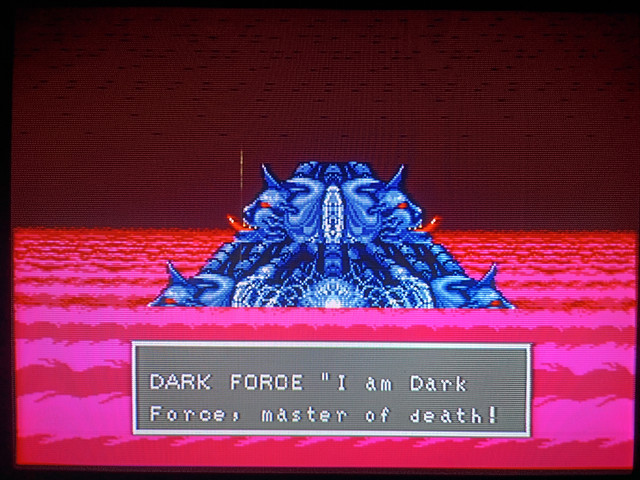
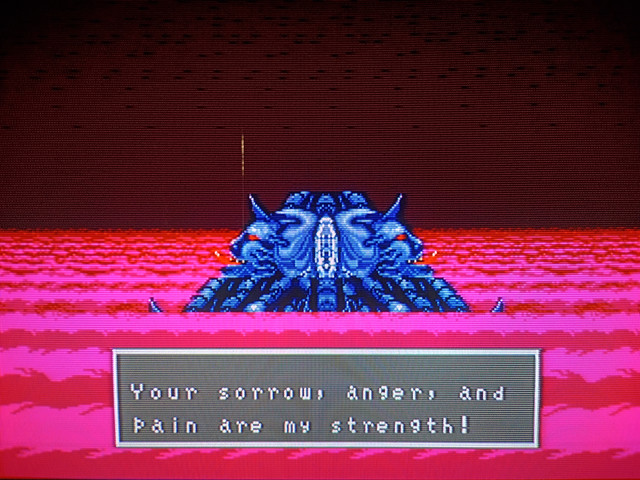
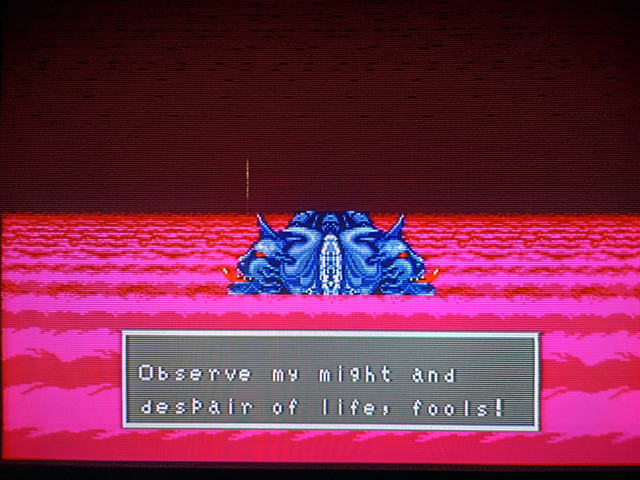
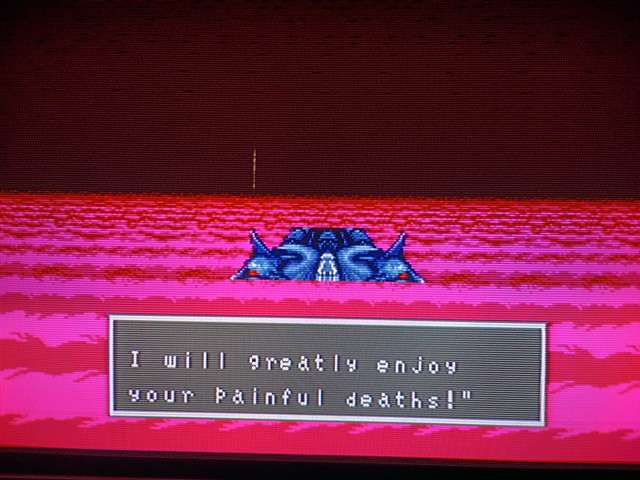
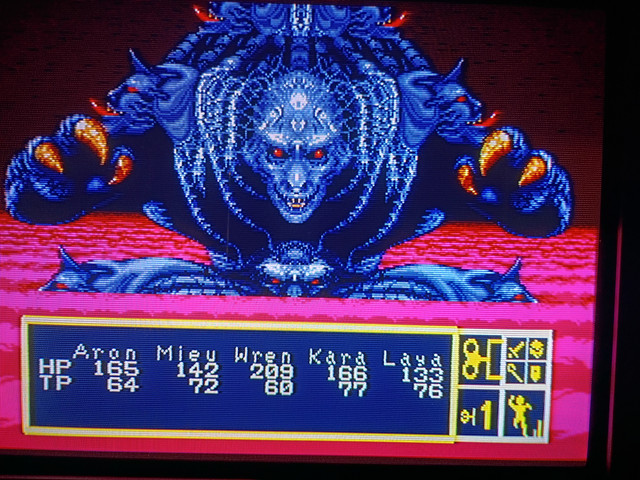
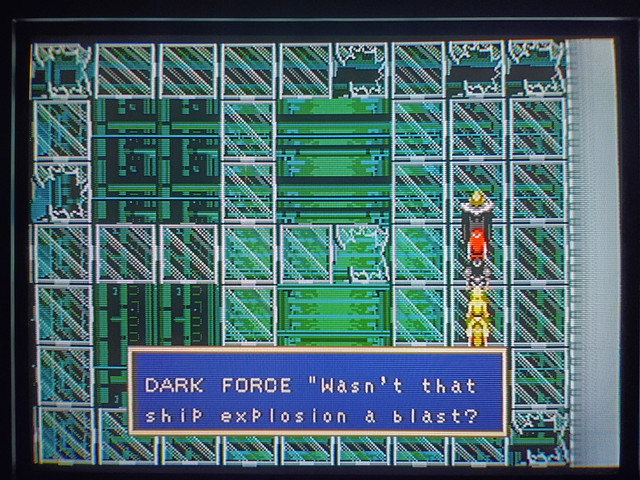
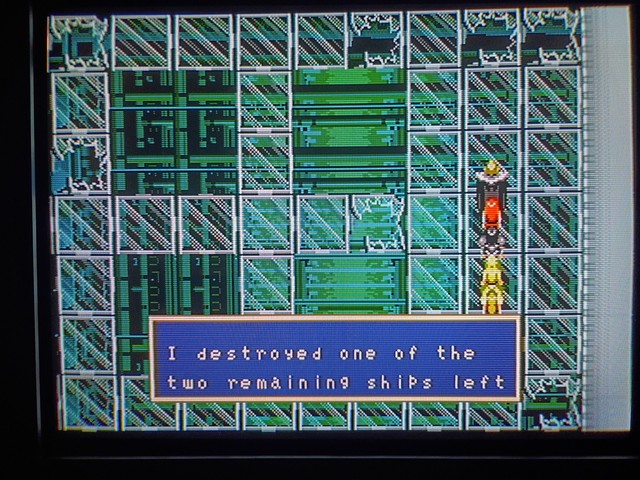
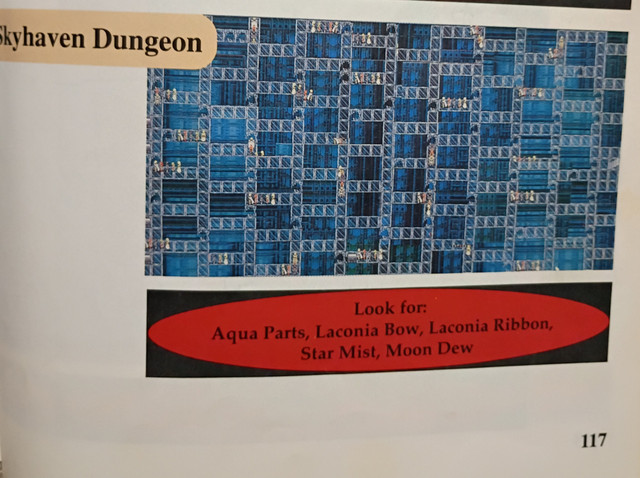
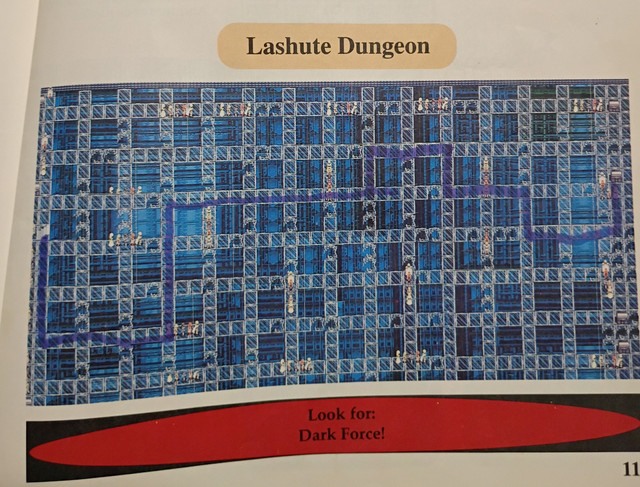
 ) a line from the entrance directly to Dark Force, which I appreciated and used lmao